Talk to Our Engineer, Get a Solution in 20 minutes
Our engineers are the expert in vacuum forming products, you can let them know any requirements and specific demands, then they work out the solution soonest and send back it for free.

Thermoforming Choices Change Cost, Durability, And Design — Here’s How To Pick.
Thermoforming looks simple: heat, form, trim. But the real skill is choosing the right gauge for the job. Pick wrong, and you pay later — with warranty claims, unhappy customers, or repeated retooling. Pick right, and you save time, money, and headaches. Below I’ll walk you through the decision like I was standing next to your product manager — practical, blunt, and with a few numbers you can actually use.
Thin-Gauge Thermoforming — Fast, Cheap Parts For High Volume.
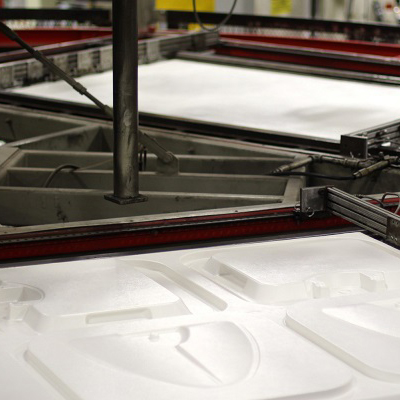
Thin-Gauge Uses Light Roll Or Sheet Stock (Usually Under ~0.060″ / 1.5 mm) For Things Like Clamshells And Trays.
Heavy-Gauge Thermoforming — Strong, Serviceable Parts Built To Last.
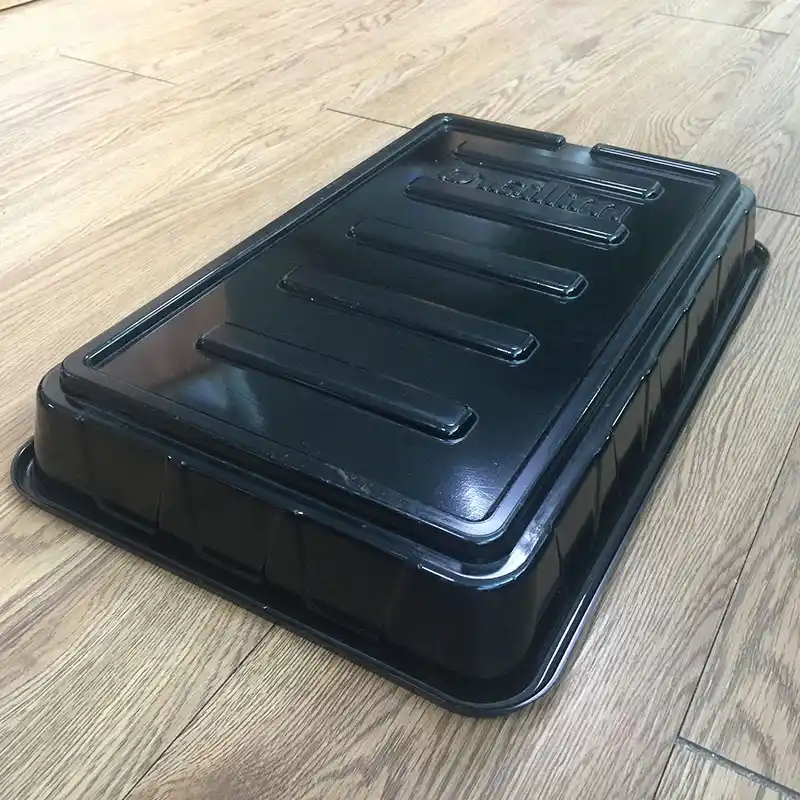
Heavy-Gauge Uses Cut Sheets (Commonly Above ~0.060–0.120″ And Up) For Enclosures, Panels, And Structural Components.
High Volume Beats Heavy Tooling Costs For Disposable Parts.
Thin-Gauge Runs Make Sense When You’re Making Tens Of Thousands (Or More) — The Roll Stock And Fast Cycle Times Crush Unit Costs. Heavy-Gauge Makes Sense When The Part Needs To Survive Years Of Use; The Tooling Is Pricier, But It’s Bought For Strength, Not For Speed.
Design For The Worst Day, Not The Average Day.
If your part will be dropped, slammed, or handled every service visit, heavy-gauge is the safer bet. Thin-gauge is fine for items that only need to look good and hold a product for a few hours or a few uses.
Human Rule-Of-Thumb: If you’d feel bad seeing one fail in the field, go heavier. If it’s disposable and cheap to replace, go thin.
Cheap Tools Are Fast; Expensive Tools Look And Fit Better.
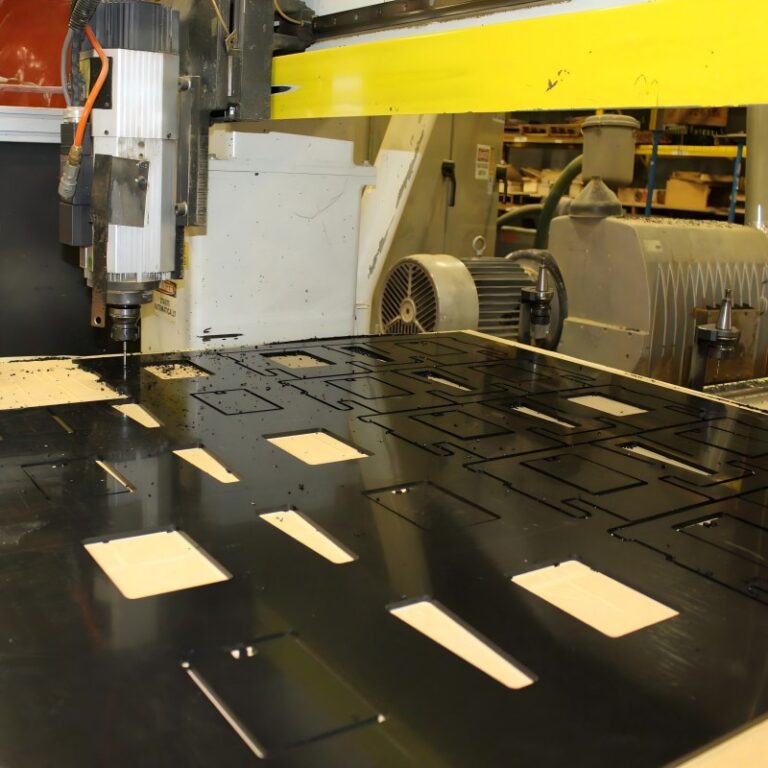
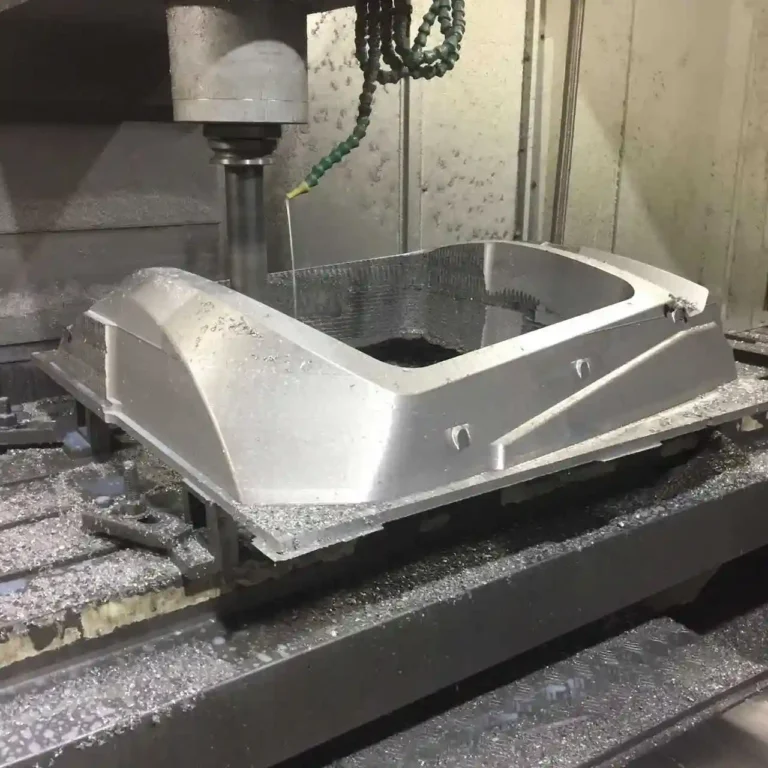
Thin-gauge tooling is quick to make and cheap to revise. Heavy-gauge tooling typically uses machined aluminum or even steel and buys you repeatability, polish, and long life. If finish or brand perception matters, budget for the better tool.
Quick Tip: Ask your vendor for “tool life” in cycles. If they dodge the question, that’s a red flag.
If You Need Precision Or Inserts, Think Heavy.
Need threaded bosses, press-fit metal inserts, EMI shielding, or tight snap-fits? Heavy-gauge accepts secondary machining and inserts far more cleanly. Thin-gauge can do clever stuff, but expects thin walls near deep draws and more variation.
Practical Fix: If you must use thin-gauge and need inserts, plan an overmolded or bonded bracket rather than relying on heat-set bosses.
Match The Polymer To The Problem, Not The Price Tag.
Both thin and heavy approaches accept ABS, PETG, HIPS, PP, etc. But heavy-gauge lets you use tougher sheets — polycarbonate for impact, acrylic for optical clarity, or composite sheets for stiffness. Start your spec with the function (impact, flame rating, UV, food contact) — then pick the polymer.
Small Exercise: Write Your Top 3 Requirements (e.g., UV resistance, impact at -10°C, optical clarity). Use Those To Shortlist Materials.
Little Choices Prevent Big Problems Downstream.
• Smooth Wall Transitions — Avoid Huge Thickness Jumps.
• Generous Draft Angles — They Help Release And Trim.
• Plug-Assist For Deep Draws — Prevents Extreme Thinning.
• Plan Bosses For Inserts — Set Boss ID/OD And Wall Thickness Early.
• Prototype Early — A €200 vacuum-formed mockup will save you weeks.
Human Tip: Prototype As If You’re Insuring Your Tool — it’s cheaper and less humiliating to fix a CAD error than to re-cut a mold.
Short-Term Savings Can Become Long-Term Costs.
Thin-gauge looks greener per part because it uses less material — great for disposable packaging. Heavy-gauge may use more material, but if it replaces multiple parts or metal, lifetime footprint can be lower. Always balance raw-material metrics with expected life and repairability.
Ask Suppliers: What Do You Do With Trim Offcuts? Can They Be Recycled Back Into The Process?
Retail Clamshell — Thin-Gauge Wins.
Goal: Lowest Cost, High Throughput. Result: Thin-Gauge Permitted Fast Output And Minimal Waste.
Medical Enclosure — Heavy-Gauge Wins.
Goal: Threaded Bosses, Service Access, Tight Tolerances. Result: Heavy-Gauge Allowed Inserts And Post-Machining — It Cost More Upfront, But It Reduced Field Failures.
Score 1–5 On: Volume Needs, Structural Requirement, Surface Finish, Insert Needs, Sustainability Priority.
Higher Score Toward Volume → Thin-Gauge. Toward Structural/Precision → Heavy-Gauge.
If You Want, I’ll Fill This For Your Specific Part — Tell Me: Expected Annual Volume And Whether It Carries Load.
If A Vendor Dodges These, Move On.
1.Is There A Middle Ground?
Yes. Medium-Gauge (About 1.5–3 mm) Gives Some Strength Without Heavy Tooling.
2.When Is Injection Molding Better?
For Tiny, High-Volume Parts With Super Tight Tolerances, Injection Molding Often Wins Per-Part.
3.Can Thermoformed Parts Be Beautiful?
Absolutely. Polished Heavy-Gauge Tools Make Premium Surfaces; Thin-Gauge Can Be Printed Or Laminated For Good Looks.
Make your process choice based on how the part will be used, serviced, and recycled — not just on the cheapest quote. A smarter choice at the design table saves time, money, and reputations.

TKP Plastic is China's leading provider of vacuum forming solutions. We are defined by our commitment to innovation, uncompromising quality, and total customer satisfaction. Our expertise enables us to deliver projects that excel in cost-effectiveness, intricate design, and sustainable manufacturing. Partner with TKP to bring your vision to life with precision and reliability.