Talk to Our Engineer, Get a Solution in 20 minutes
Our engineers are the expert in vacuum forming products, you can let them know any requirements and specific demands, then they work out the solution soonest and send back it for free.

Cosplay has shifted from a niche hobby to a craft-driven culture where accuracy, durability, and presentation matter as much as passion. Whether you’re building a gauntlet that must survive travel and photoshoots or a helmet that needs to look screen-accurate under bright lights, the method you choose shapes the result. This article cuts past marketing claims to compare vacuum forming and traditional methods so you can pick the right tool for the job — especially when exploring professional processes like vacuum forming for costume-grade components.
If you’re a weekend-maker, a pro prop fabricator, or somewhere in between, this guide will help you weigh cost, time, durability, and finishability — and show where a hybrid approach often gives the best outcome, similar to how manufacturers combine different services to meet complex project needs.

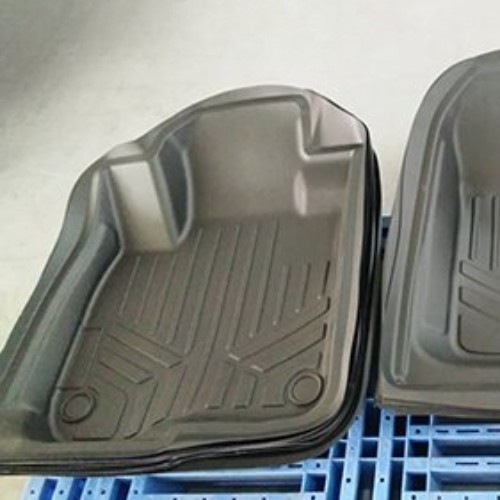
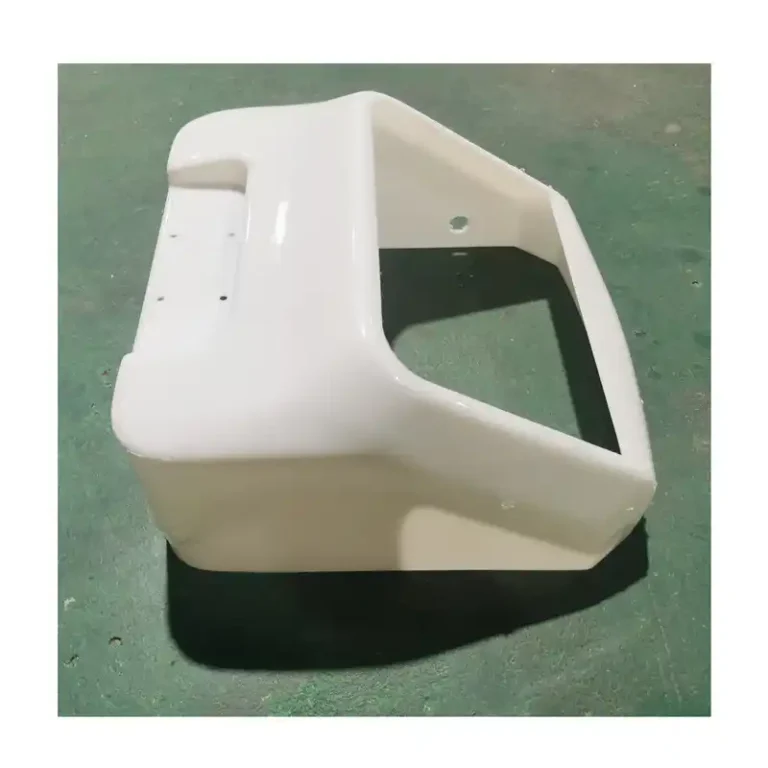
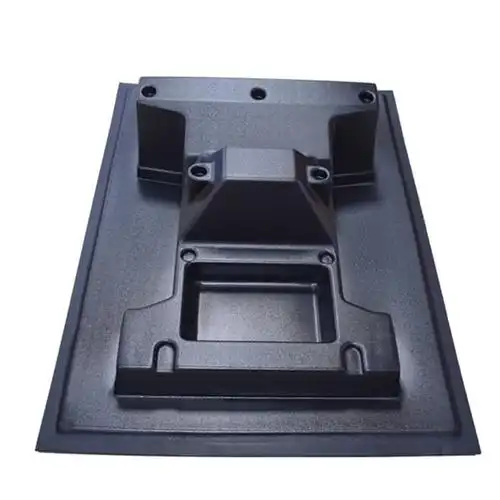
Vacuum forming is a thermoforming process: a plastic sheet is heated until pliable, then pulled over a mold while a vacuum removes the air so the plastic conforms tightly. In cosplay, it’s used for armor plates, helmets, masks, and any hollow or semi-hollow pieces where a thin, smooth shell is desirable, much like the custom parts produced for automotive applications.
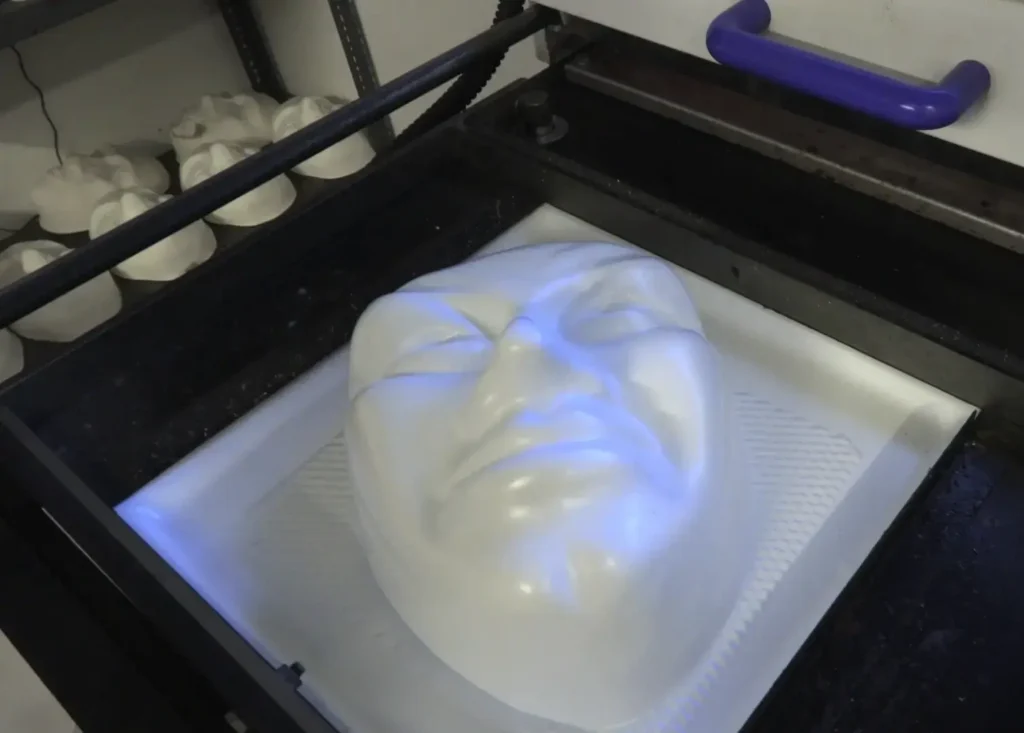
You start with a positive mold (often 3D-printed, carved foam, or machined). The heated sheet stretches over it; suction ensures detail reproduction and uniform wall thickness (within limits). After cooling, the shell is trimmed, smoothed, and finished with filler, primer, and paint — the same base process used in customized plastic products.
Vacuum-formed pieces are lightweight, smooth, and can capture the silhouette and broad details of a mold. Once the mold exists, producing multiples becomes quick and predictable — ideal for costume sets, group cosplays, or sellers of props using materials like PETG vacuum forming.
The downsides are tangible: vacuum forming requires equipment (oven, vacuum pump/table) and good molds, which take time or money to make. Fine undercuts, sharp internal details, or extremely thick and complex geometry can be problematic, especially when working with thick gauge vacuum forming. Some materials are harder to form, and finishing steps (sanding, gap-filling, reinforcing) are still needed for a polished result.
Traditional techniques include hand-sewing, EVA foam crafting, Worbla thermoplastic shaping, sculpting with clay, paper-mâché, leatherwork, and basic woodworking. These rely on handheld tools and materials that are widely available and often inexpensive, in contrast to industrial processes seen across different industries.
Traditional methods lower the barrier to entry: your first prop can be made with a heat gun, craft foam, glue, and a few basic tools. They excel at organic shapes, textile embellishment, and fine surface detail applied by hand. For a one-off, custom-fit piece, these methods let you iterate quickly without heavy upfront investment.
Handcrafting can be time-consuming. Achieving uniform thickness, perfectly symmetrical pairs, or a pristine smooth shell is harder by hand. Results depend heavily on skill and patience; two makers using the same foam and patterns can produce noticeably different outputs.

Vacuum forming demands an initial investment: a thermoforming setup and quality molds. For a hobbyist, that outlay can be steep. But if you plan to produce many parts or sell props, cost per piece drops quickly. Traditional methods remain lower-cost to start but scale poorly if you need many identical pieces — each one takes time and labor, which is a cost in itself.
Vacuum forming excels for batch production. Once a mold is ready, turnaround is rapid. Traditional crafting shines for single-piece custom work and for rapid prototyping since you can modify on the fly without remaking a mold. For a single helmet, foam may be faster; for a dozen armor panels, vacuum forming will win time-wise.
Vacuum-formed shells (when made from ABS, PETG, etc.) can be rigid and durable, especially when reinforced with internal ribs or backed with foam. Foam and thermoplastic builds are often more flexible and can absorb impacts better but may show wear faster. Long-term durability also depends on how pieces are joined, painted, and stored.
Vacuum forming requires understanding of temperature control, material behavior, and mold design — a steeper learning curve. Traditional methods are often more forgiving and intuitive: cutting, gluing, shaping by eye. That said, mastery of either method takes practice.
For highly unique, sculptural details, hand techniques allow infinite customization and iterative changes. Vacuum forming reproduces whatever the mold contains — so you can get tiny differences only by modifying the mold. The ideal balance is to use vacuum forming for structural or repeatable parts and handwork for surface detail and personalization.

TKP Plastic is China's leading provider of vacuum forming solutions. We are defined by our commitment to innovation, uncompromising quality, and total customer satisfaction. Our expertise enables us to deliver projects that excel in cost-effectiveness, intricate design, and sustainable manufacturing. Partner with TKP to bring your vision to life with precision and reliability.