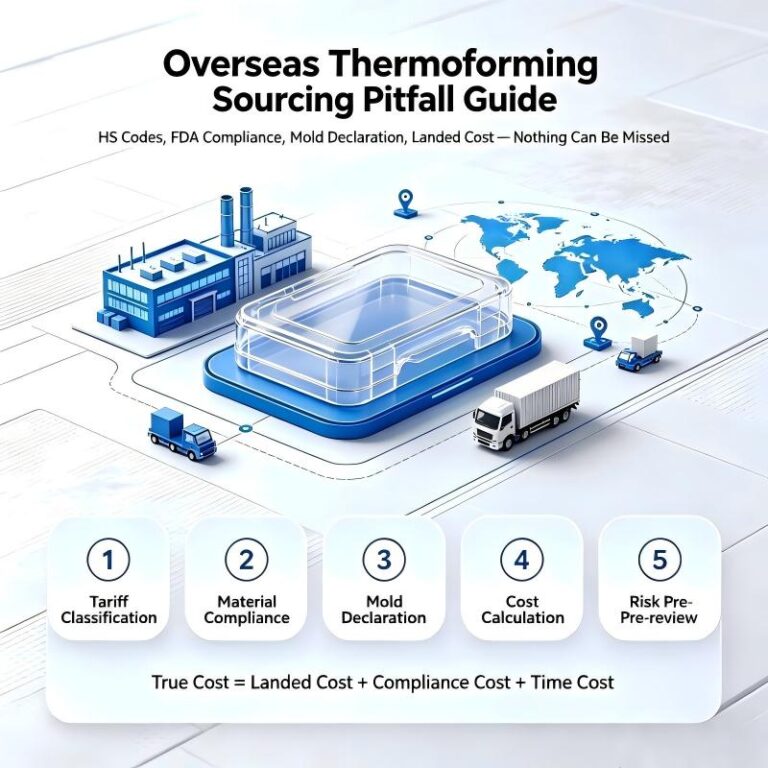
Talk to Our Engineer, Get a Solution in 20 minutes
Our engineers are the expert in vacuum forming products, you can let them know any requirements and specific demands, then they work out the solution soonest and send back it for free.

The quietly powerful plastic process most people use every day — without realizing it
If you’ve ever opened a product package and thought, “This plastic fits almost too perfectly,” you’ve already met vacuum forming — a process widely used across modern manufacturing and explained in more depth on the vacuum forming homepage .
Vacuum forming isn’t flashy. It doesn’t get the hype injection molding gets. There are no dramatic machines slamming shut at thousands of PSI. And yet, vacuum forming is one of the most practical, forgiving, and business-friendly plastic processes in modern manufacturing, especially for customized plastic products like housings, trays, and enclosures (customized plastic products) .
At its core, vacuum forming is about control — controlling heat, air, and material flow in a way that turns a flat plastic sheet into a useful shape without overengineering the process.
And that’s exactly why it survives in industries where margins are tight and timelines are real.
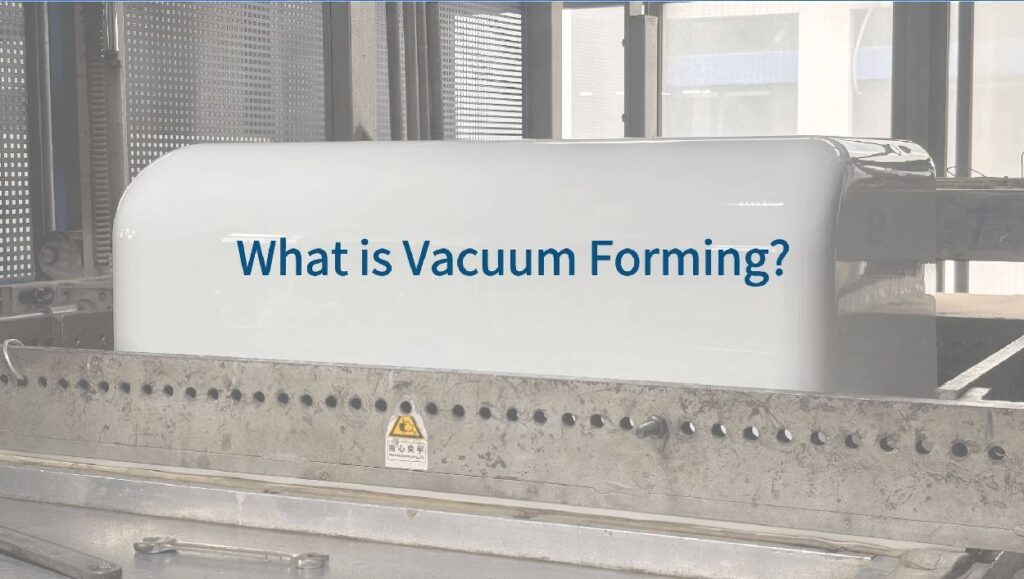
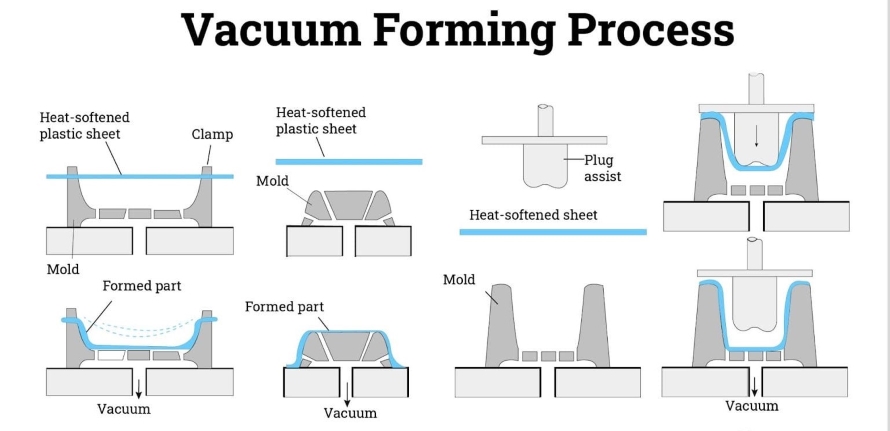
Forget the textbook steps for a moment. Here’s what really happens.
A plastic sheet is heated until it reaches a point where it wants to move. Not melting — just soft enough to obey. At that moment, timing matters more than theory, especially when working with different vacuum forming materials like ABS, PETG, or HIPS (materials) .
The softened sheet meets a mold. Air is pulled out from between them. Nature does the rest.
Atmospheric pressure — something we never think about — suddenly becomes the forming force. With nowhere else to go, the plastic wraps itself around the mold, settling into curves, edges, and recesses.
No extreme pressure. No complicated mechanics. Just heat, air, and gravity working together.
This simplicity is not a weakness — it’s the entire advantage.
Even after decades of newer technologies
Manufacturing trends come and go, but vacuum forming stays because it solves problems before they become expensive, particularly in sectors like automotive, medical, and electronics manufacturing (industries) .
Vacuum forming allows early failure, and early failure saves money.
That’s why engineers, product designers, and manufacturers keep returning to it — especially when the product is large, cosmetic, or evolving.
Why sheet plastic doesn’t stretch evenly — and why that matters
Here’s something competitors won’t tell you clearly:
Plastic doesn’t behave politely when heated.
When a flat sheet stretches over a mold, it thins unevenly. Areas that stretch first get thinner. Corners steal material from nearby surfaces. Deep draws starve sidewalls — a common challenge in both thin-gauge and thick-gauge vacuum forming applications (thick plastic vacuum forming) .
This is why vacuum forming is as much material choreography as it is process.
Good vacuum forming design anticipates where plastic wants to go — and where it must be guided.
That’s why experienced manufacturers use:
The result isn’t just a formed part — it’s a predictable one.
A cheap mold doesn’t always mean cheap results — but it can
One of vacuum forming’s biggest selling points is tooling flexibility. You can form parts using:
But here’s the truth: The mold determines consistency, not the machine.
The best vacuum formed parts don’t come from fancy machines — they come from thoughtful mold design and experienced vacuum forming services (services) .
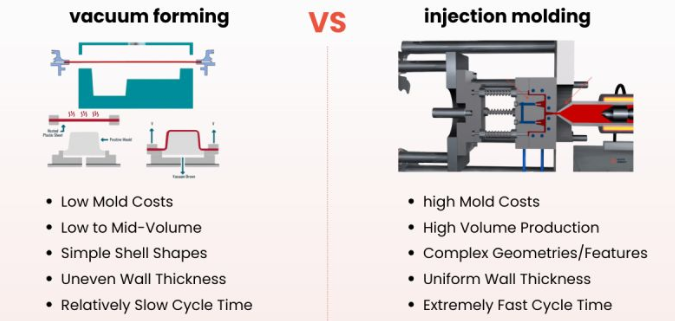
No marketing bias — just tradeoffs
Injection molding is unbeatable for:
Vacuum forming wins when:
If injection molding is a scalpel, vacuum forming is a multi-tool. It’s not about perfection — it’s about practicality.
Industries that rely on it but rarely advertise it
Vacuum forming thrives in places where form, speed, and cost intersect:
These are not “cheap” products. They’re products where smart manufacturing decisions matter more than bragging rights.
Why formed parts aren’t finished parts
Vacuum forming doesn’t end when the plastic cools.
Trimming, CNC routing, drilling, bonding, painting — this is where formed parts become usable components.
Designers who understand vacuum forming design with finishing in mind:
This mindset is what separates amateur forming from professional production.
Less waste than you think — when done correctly
Because vacuum forming starts with sheet material, waste is visible — and manageable.
In many real-world cases, vacuum forming is actually the lower-impact option.
And how to avoid it
The biggest mistake isn’t material choice. It isn’t mold cost. It’s designing like injection molding and expecting vacuum forming to behave the same way.
Vacuum forming rewards:
Once you accept those rules, it becomes one of the most forgiving manufacturing processes available.
Vacuum forming is not a shortcut. It’s not “cheap plastic.” It’s not outdated.
It’s a strategic manufacturing tool for people who value speed, flexibility, and realistic economics.
If you understand how the material moves — not just how the machine works — vacuum forming stops being a compromise and starts becoming an advantage.

TKP Plastic is China's leading provider of vacuum forming solutions. We are defined by our commitment to innovation, uncompromising quality, and total customer satisfaction. Our expertise enables us to deliver projects that excel in cost-effectiveness, intricate design, and sustainable manufacturing. Partner with TKP to bring your vision to life with precision and reliability.