Talk to Our Engineer, Get a Solution in 20 minutes
Our engineers are the expert in vacuum forming products, you can let them know any requirements and specific demands, then they work out the solution soonest and send back it for free.
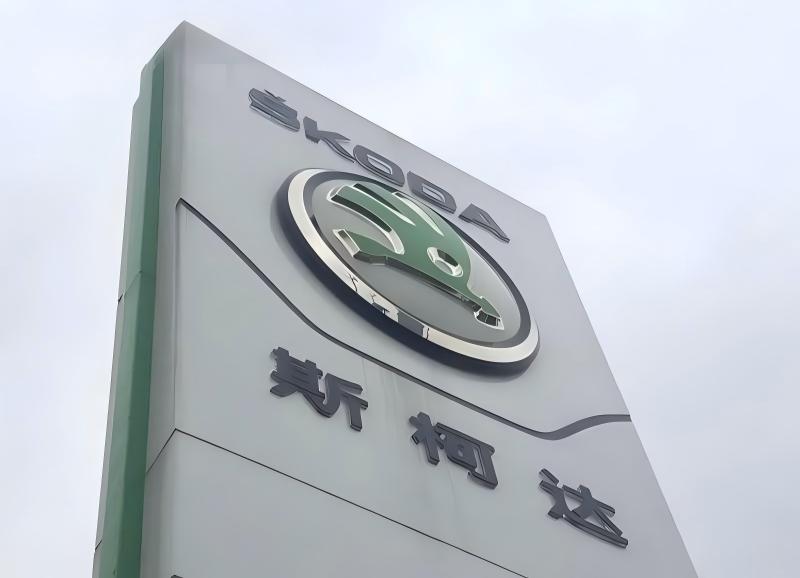
Summer doesn’t just feel hot—it acts hot. Metal burns your fingers, dark paint turns into a griddle, and anything exposed to direct sun seems like it’s under attack. So when you look up at those glossy acrylic logos above car dealerships, the question makes sense: do they quietly warp, fade, or crack after a few brutal summers?
Acrylic (PMMA) is chosen because it looks premium: clear, bright, glass-like. It’s also marketed as “weather resistant,” which sounds comforting… until you remember one detail: vacuum forming softens acrylic with heat. And once people hear that, they start wondering whether the sun can do the same thing.
Let’s break it down the way reality works: not by vibes, but by thresholds.
Acrylic, or PMMA, is a synthetic polymer built from methyl methacrylate molecules linked into long chains.
What you notice first is the optics. Acrylic can transmit more than 92% of visible light, which is why it looks so clean and “high-end” on signage. It gives that crisp edge and glossy highlight that makes logos pop—especially at night with internal lighting.
It’s also much lighter than glass, roughly about half the density, which makes it practical for elevated installations. And in outdoor use, it holds up better than many plastics against rain, dust, and everyday chemical exposure. That mix—clarity + light weight + outdoor stability—is why it’s everywhere in dealership branding.
Here’s the key idea: hot isn’t a problem—crossing the wrong temperature is.
PMMA’s glass transition temperature is around 105°C. That’s the point where the material’s behavior changes—less rigid, more rubbery. In real-world use, acrylic sheets are typically recommended for continuous service somewhere around 65°C to 95°C depending on grade and formulation.
Deformation becomes more likely near the heat distortion temperature—around 96°C under a load of 1.18 MPa. And decomposition? That happens far above normal outdoor life, above ~270°C.
Now compare that to summer conditions:
So the practical conclusion is simple: summer heat alone usually isn’t enough to push acrylic into true deformation territory. If you see warping, it’s often because of stress, installation constraints, poor grade material, or long-term UV aging—not because the air hit 40°C.
A common misunderstanding goes like this: “If acrylic can be softened during manufacturing, the sun can soften it too.”
The missing piece is scale. Vacuum forming doesn’t happen at “hot day” temperatures—it happens at manufacturing temperatures.
Before forming, acrylic sheets are usually dried at about 80°C–85°C for 4–5 hours because acrylic absorbs a small amount of moisture (around 0.3%–0.4%). If you don’t dry it, you can trap moisture and get bubbles or defects.
Then the sheet is heated until it reaches a soft, formable state. Acrylic begins to flow around 160°C, which is nowhere near what outdoor heat can reach.
So vacuum forming proves something very different: acrylic can be shaped when you deliberately push it into a high-temperature range—but it’s meant to stay stable well below that in normal outdoor conditions.
ABS is also common in vacuum-formed signage. In some heat metrics, ABS looks competitive: its heat distortion temperature is often quoted around 93°C–118°C, and it can stay stable across a wide service range (roughly -40°C to 100°C).
But outdoors, ABS has a weakness: UV exposure can age it faster unless it’s specially protected. Color stability and surface quality can decline sooner, and the material can become more brittle over time.
Acrylic tends to age more gracefully outdoors, especially when it’s UV-stabilized. So the tradeoff becomes practical:
Dealership logos are branding tools first—so appearance matters a lot.
If acrylic signage fails early, it’s rarely because “summer exists.” It’s usually because the environment applies pressure in three slow, consistent ways:
UV radiation
UV is the long-term enemy. Unprotected acrylic can yellow, lose clarity, and slowly degrade at the surface.
Temperature cycling
Hot days and cooler nights create expansion and contraction. Acrylic expands noticeably, and if the logo is installed too tightly—with no room to move—stress accumulates.
Moisture and trapped humidity
Acrylic absorbs small amounts of water. On its own, that isn’t dramatic. The problems start when moisture gets trapped behind panels, or when the structure holds humidity against the material.
In other words: acrylic doesn’t “melt.” It gets worn down when sunlight + stress + time are allowed to stack up.
Long-lasting acrylic logos aren’t magic. They’re the result of choices that look boring—until you see the difference after three summers.
Choose UV-stabilized acrylic
This is the biggest lever. UV inhibitors matter more than most people think.
Use sensible thickness
Thicker material holds shape better, resists thermal stress, and usually looks more premium because the edges have depth.
Reduce internal stress after forming
Better manufacturers use controlled heat treatment to relax internal stress created during molding. This improves stability during temperature swings.
Install with expansion in mind
Acrylic needs room to breathe. Leave proper expansion clearances. Avoid rigid, overly tight mounting that forces the panel to “fight physics” every time the temperature changes.
Acrylic vacuum-formed car logos stay sharp through summer because their real deformation thresholds sit comfortably above typical outdoor temperatures. When problems show up, they usually come from poor material grade, UV exposure over years, internal stress from manufacturing, or installations that don’t allow for thermal movement.
Handled properly, acrylic doesn’t just survive summer—it keeps the brand looking clean, bright, and intentional long after the heat wave ends.

TKP Plastic is China's leading provider of vacuum forming solutions. We are defined by our commitment to innovation, uncompromising quality, and total customer satisfaction. Our expertise enables us to deliver projects that excel in cost-effectiveness, intricate design, and sustainable manufacturing. Partner with TKP to bring your vision to life with precision and reliability.