Talk to Our Engineer, Get a Solution in 20 minutes
Our engineers are the expert in vacuum forming products, you can let them know any requirements and specific demands, then they work out the solution soonest and send back it for free.

A Practical, In-Depth Guide To The Thermoplastics Most Used In Vacuum Forming — HIPS, ABS, PVC, Acrylic — With Forming Tips, Tradeoffs, And Design Guidance.
Choosing A Thermoplastic Is Where Product Success Begins.
Vacuum forming looks simple on paper — warm the sheet, pull vacuum, cool — but the material does most of the heavy lifting. Pick the wrong polymer and your “perfect” part warps, crazes, or fades in the field. Pick the right one and the part behaves like it was always meant to be there. This piece gives you the kind of practical thinking that shortens the back-and-forth with the shop: the heuristics, the warning signs, and the small design moves that change a scrap run into first-off success.
A Quick Look At The Polymers You’ll See Most Often.
You’ll see the same handful of resins over and over in vacuum forming shops: HIPS, ABS, PVC, acrylic (PMMA), PET/PETG, PP, HDPE, and polycarbonate. They each bring something different to the table — clarity, toughness, weathering, cost — and each forces a tradeoff. Rather than memorize pros/cons, use the decision rules below to match resin to real-world constraints.
Simple Rules That Save Time And Scrap.
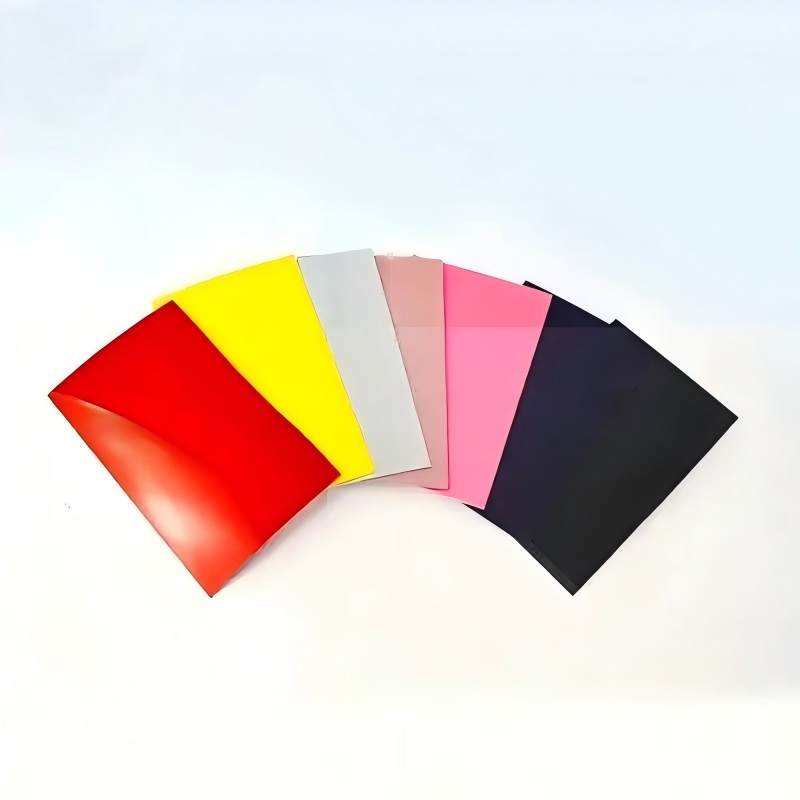
Think of thermoplastics as behaving on three axes: how they stretch (formability), how they stand up in use (service properties), and how they accept finishes (paint, adhesive, plating). Here are rules teams follow because they work:
Short, Practical Notes On The Four Most-Requested Materials.
Low Cost, Easy To Form, And Friendly For Finishing.
HIPS is the “work-dress” material: cheap, predictable, and forgiving. It fills detail, takes ink and paint well, and is excellent for displays, trays, and short-lifetime interior pieces. But it doesn’t love long sun exposure or rough chemicals unless specially formulated.
When To Reach For HIPS: Low-cost displays, quick prototypes, parts that will be printed or painted.
Watch Outs: Not ideal for constant outdoor exposure; avoid strong solvents.
Tough, Dependable, And Better For Functional Parts.
ABS brings mechanical backbone: impact resistance and better heat tolerance than HIPS. It forms well but can show stress whitening if you overstretch it — a visual clue that the geometry needs a rethink. ABS may need a primer for high-end paint finishes.
When To Reach For ABS: Housings, interior panels, parts that see knocks or moderate heat.
Watch Outs: Surface prep for paint; certain solvents attack ABS.
Versatile And Cost-Effective, But Temperature-Sensitive.
PVC’s strength is variety: rigid or flexible grades, solid chemical resistance in many contexts, and affordability. The downside is sensitivity — overheat it and you get degradation and unpleasant fumes. Flexible PVC’s plasticizers can migrate, so think twice where cosmetics matter.
When To Reach For PVC: Cost-sensitive signage, housings that need chemical resistance.
Watch Outs: Control temperature and ventilation; beware plasticizer migration.
Optical Clarity And Weathering — The Premium Choice For Looks.
If “see-through” and “glossy” are non-negotiable, acrylic is the go-to. Cell-cast grades give the best clarity; extruded is cheaper and behaves slightly differently. Acrylic is more brittle, so tight radii and heavy stretch zones demand careful forming and sometimes annealing.
When To Reach For Acrylic: Light panels, display windows, premium transparent parts.
Watch Outs: Brittle on impact; narrow forming window; anneal when in doubt.
Real Moves That Cut Iterations.
Short Checks Before You Scrap A Part.
Practical Choices, Not Platitudes.
Recyclability is real but conditional. HIPS, PET, PP, and HDPE move through recycling streams more easily; mixed laminates, heavy fillers, or coatings make recycling fragile. If you care about circularity, design single-material parts and specify PCR grades when color and properties permit.
Fast Answers For Real Questions.
A run of decorative sink trim looked great in the shop but dulled in a few months when exposed to dishwasher sprays and hard water. The original HIPS parts were cheap to vacuum form but failed the environmental test. Swapping to ABS and adding a protective topcoat solved the durability issue — and the team learned to start with “where will this live?” before choosing a sheet.
A Short, Practical List To Avoid Rework.
Don’t default to whatever sheet is in the warehouse. Define what the part must do, pick a resin that maps to those needs, prototype in the real environment, and plan finishing and recycling from the start. That simple discipline prevents most of the costly surprises.

TKP Plastic is China's leading provider of vacuum forming solutions. We are defined by our commitment to innovation, uncompromising quality, and total customer satisfaction. Our expertise enables us to deliver projects that excel in cost-effectiveness, intricate design, and sustainable manufacturing. Partner with TKP to bring your vision to life with precision and reliability.