Intro
Plastic thermoforming is a core process in packaging, displays, and light industrial parts — and PET family materials (PET, PETG, APET) are among the most commonly used sheets. They’re prized for clarity, strength, and food-contact performance, but each variant behaves differently in the oven and at the tooling. This post explains what each material is, how and where it’s used, the practical differences in vacuum forming them, and actionable tips for getting repeatable, high-quality parts.
Quick material snapshot
- PET (Polyethylene Terephthalate) – the base polymer. Can be produced in semi-crystalline (CPET) or amorphous (APET) states. Good barrier properties, strong, widely recycled. Semi-crystalline grades are ovenable (trays), amorphous grades are clear and formable.
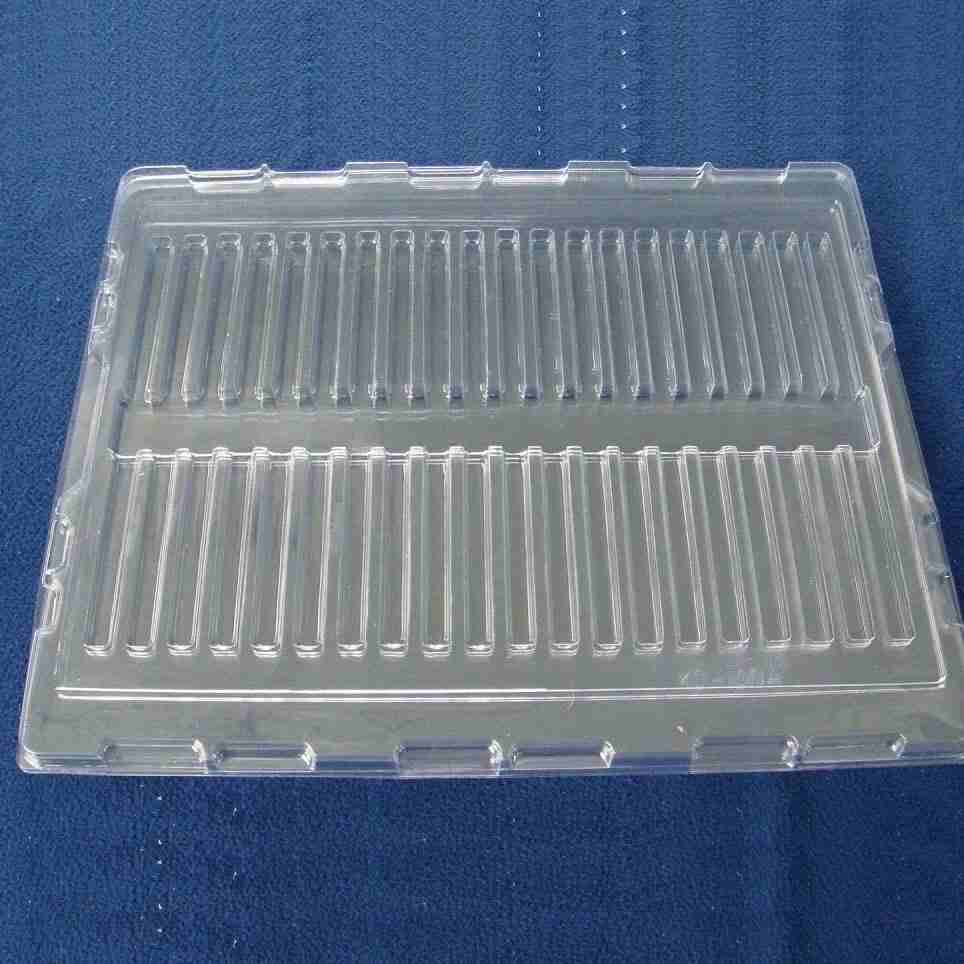
- APET (Amorphous PET) – PET processed to remain transparent (non-crystallized). Common for clear clamshells, blister packs, retail packaging.
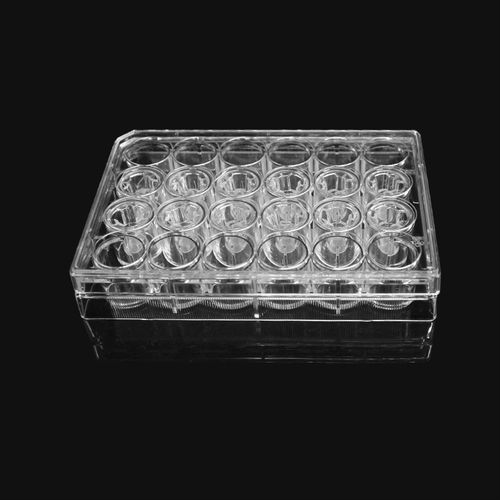
- PETG (Glycol-modified PET) – PET with glycol added during polymerization. Lower tendency to crystallize, improved impact resistance and formability at lower temperatures; popular in displays, signage, and medical housings.
Where each is used (applications)
APET
- Retail packaging (blisters, clamshells) where optical clarity matters.
- Food trays and clear protective covers.
- Lightweight point-of-sale displays.
PETG
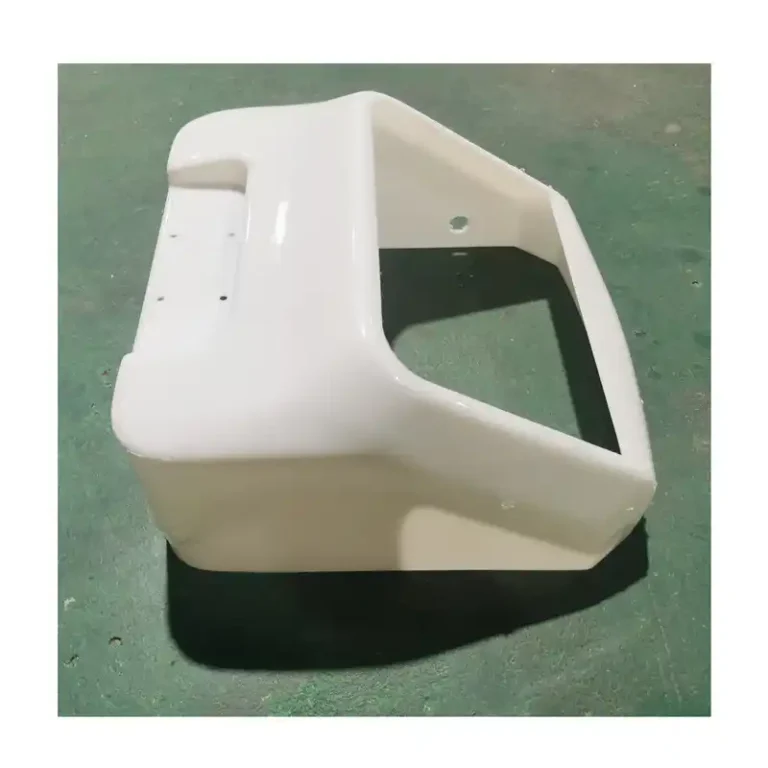
- Rigid displays and signage that require easier forming and some bending after forming.
- Medical device housings (biocompatibility and sterilization options vary).
- Prototypes and short-run consumer products that need impact resistance and good clarity.
PET / CPET
- Ovenable food trays (baked/reheated) — uses semi-crystalline grades that withstand higher temperatures.
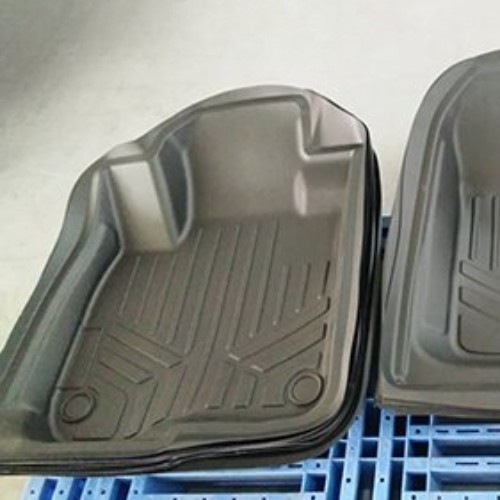
- More structural parts where heat resistance is necessary.
- APET: Amorphous, transparent, and typically forms well when heated just above its softening range. It has a narrower forming window than PETG — control of oven profile is important to avoid sagging or webbing.
- PETG: Lower forming temperature and a broader, more forgiving forming window. Less likely to craze or crack under high draw and better for deep draws or complex contours.
- CPET (crystalline PET): Requires much higher temperatures and is usually not processed the same way as APET/PETG for retail packaging.
Practical tip: List oven temps as typical ranges only — exact setpoints depend on sheet thickness, heater type, and machine. Always run test cycles and measure sheet center temperature.
- Drape forming (free-forming) works for shallow parts in APET and PETG.
- Plug-assist is recommended for deep draws or tight radii (common with PETG because it enables deeper draws without thinning or webbing).
- Pressure forming (vacuum + positive pressure) improves detail and wall distribution; useful with PETG for sharp detail and clarity.
3. Sheet thickness and draw ratio
- Typical packaging gauges: thin gauge (0.15–1.0 mm) for blister/clamshell, heavy gauge (1.5–6 mm) for structural trays or signage.
- Thicker sheets need longer, more uniform heating. PETG tolerates thicker sheets better without cracking than APET in some cases.
- Tool material: aluminum CNC molds are standard, with polished finishes for glossy parts. Consider mirror polish tooling for optical clarity in APET/PETG.
- Draft & radii: generous radii and draft angles reduce thinning and webbing; plug assist reduces wall thinning in tight radii.
5. Post-processing: trimming, annealing, decoration
- Trimming: blade, guillotine, or CNC routing depending on geometry. PETG cuts cleanly but can generate burrs if tooling is dull.
- Annealing: optional for large/flat parts to relieve stresses and reduce warpage. APET may need careful annealing to prevent crystallization.
- Surface treatment: corona treatment or flame treatment is commonly used before printing or adhesive bonding to increase surface energy.
- Printing/decoration: UV offset, screen print, or hot stamping; PETG’s surface accepts inks well after treatment.
Common processing problems and fixes
- Webbing / thin center: Reduce heating time or use a plug assist to redistribute material.
- Cracking / crazing at corners: Lower forming strain by using plug assist, increase material ductility (switch to PETG if appropriate), or increase sheet temperature slightly.
- Loss of clarity / haze: Overheating (crystallization) can cause haze in PET/APET. Reduce oven temperatures or shorten dwell.
- Warping after trim: Insufficient annealing or trimming that introduces stresses — consider stress-relief anneal or change trim order.
Environmental & regulatory notes
- Food contact: Many APET and PETG grades are available with food-contact approvals; check vendor datasheets and local regulations before using in food packaging.
- Recycling: PET is one of the most recycled plastics (check local recycling streams — PETG can complicate sorting in some systems). Use mono-material designs where possible to improve recyclability.
Quick checklist for specifying sheet & process
- Define end-use (clarity, heat resistance, food contact, impact resistance).
- Choose material: APET for crystal-clear retail packaging; PETG for easier forming, impact resistance; CPET for ovenable trays.
- Pick initial sheet thickness and supplier datasheet.
- Run forming trials: measure sheet center temperature, try plug assist if deep draw.
- Test trim, print adhesion (after corona), and perform stress/anneal checks.
- Validate end-use conditions (hot fill, sterilization, refrigeration).
Conclusion
APET, PETG and PET (including CPET) belong to the same polymer family but have different behaviors that matter a lot during vacuum forming. APET gives excellent clarity for retail packaging, PETG adds forgiving formability and impact resistance, and CPET handles high-temperature applications. The right choice depends on the product’s optical, mechanical and regulatory needs — and on careful tuning of oven profile, forming method, and tooling. Run controlled trials and treat the first production runs as experiments: small adjustments in heating, plug geometry, or post-anneal often yield big improvements.
FAQ (short & practical)
Q: Can I substitute PETG for APET in an existing mold?
A: Often yes for many display parts — PETG forms more easily and is more impact resistant — but check part clarity, shrinkage, and print/adhesion requirements first.
Q: Which material is best for food packaging?
A: APET and certain PETG grades are used for food packaging; for ovenable trays use CPET. Confirm supplier food-contact certifications.
Q: Are PETG and APET recyclable together?
A: They’re chemically related, but recycling streams vary by locality. Mono-material design is safest for recycling.
Q: My APET parts are hazy after forming — why?
A: Likely local crystallization from overheating. Lower oven temperature or shorten dwell time and re-test.
Q: Is plug-assist necessary?
A: For deep draws, tight radii, or to control wall thickness, yes — plug assist reduces stretching and webbing.
Q: How do I prepare PET/PETG for printing?
A: Use corona or flame treatment to raise surface energy, then test inks and adhesives for adhesion and scratch resistance.