Talk to Our Engineer, Get a Solution in 20 minutes
Our engineers are the expert in vacuum forming products, you can let them know any requirements and specific demands, then they work out the solution soonest and send back it for free.

Introduction
Thermoforming quietly powers millions of everyday plastic parts — from blister packs and yogurt lids to aircraft interior panels and medical trays. It’s fast, flexible, and often overshadowed by injection molding in mainstream conversations. This post pulls back the curtain: you’ll get practical design tips, surprising technical details, sustainability advances, and a few industrial secrets that even some designers miss.
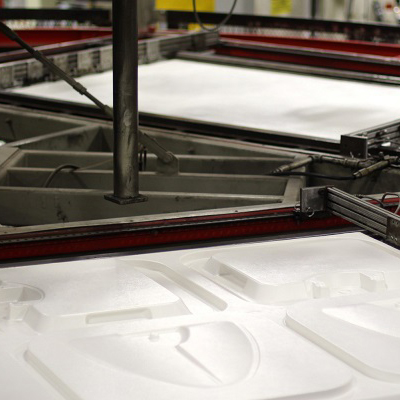
People often say “thermoforming” as if it’s one single process. In reality it’s a family of techniques: vacuum forming (pulling heated sheet to a mold with vacuum), pressure forming (vacuum + compressed air for finer detail), plug-assisted forming (a mechanical plug pre-stretches the sheet), and matched-die forming (sheet is pressed between male/female molds for high-precision parts). Each method trades off surface detail, draft requirements, and cycle time — pick the method to match your priorities (detail, strength, speed).
Beyond PET, PVC, and ABS, thermoforming now uses co-extruded multi-layer sheets (for barrier properties), filled sheets (wood pulp, mineral fillers), and engineered polymers with flame-retardant or anti-microbial additives. That means you can get food-safe, UV-stable, chemically resistant, or even partially bio-based thermoformed parts — often without changing the core process. If you need multiple properties (e.g., a stiff structural core with a printable outer skin), ask about multi-layer or laminated sheets.
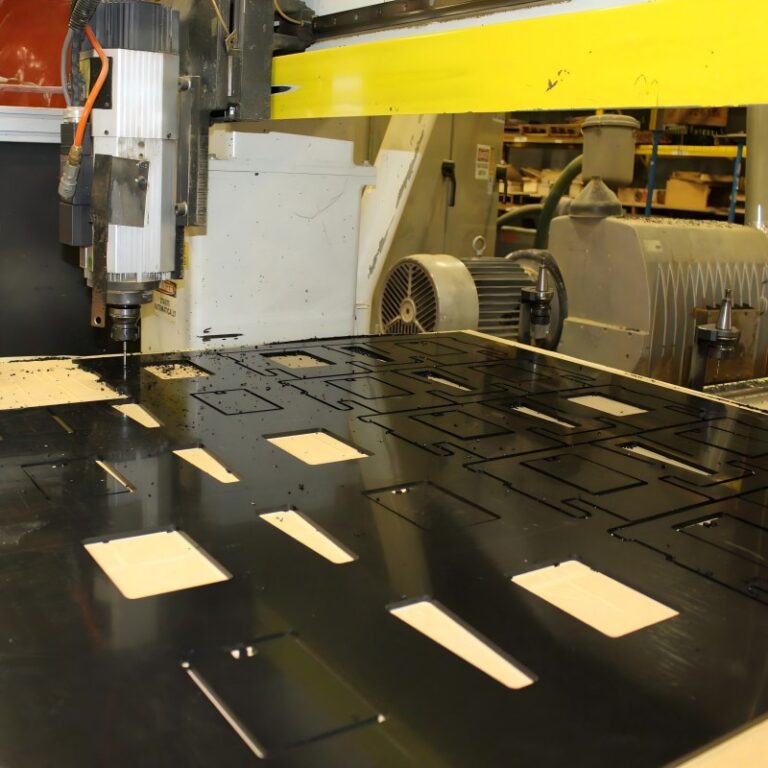
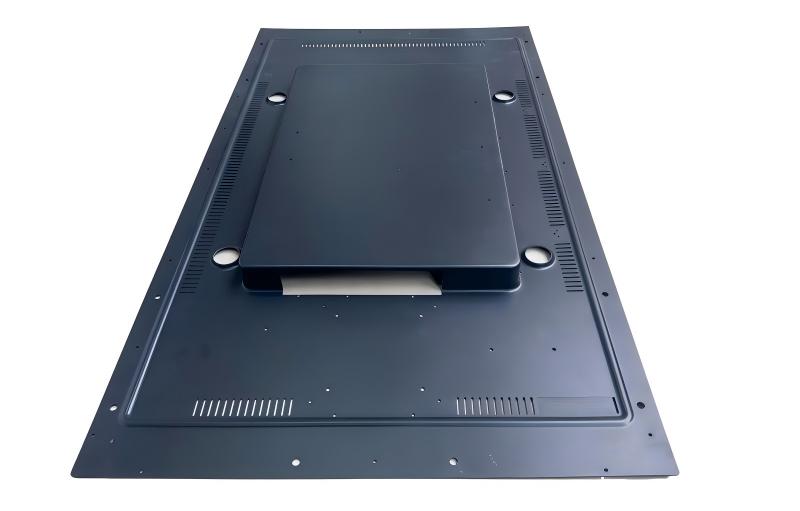
Thermoforming isn’t only for disposable packaging. Thin-gauge roll-fed lines make millions of single-use items quickly; heavy-gauge sheet forming produces durable componentry for automotive, RV, aerospace interiors, medical housings, and protective equipment. The same family of processes scales from consumer goods to industrial and regulated medical parts — which is why thermoforming shops invest in secondary operations (CNC trimming, welding, machining, painting).
Most common thermoforming plastics (PET, HDPE, PP) are widely recyclable; manufacturers increasingly use recycled feedstock (rPET, PCR HDPE) and design parts to be mono-material (so they’re easier to recycle). There are also approaches with natural fillers or lighter wall-thicknesses that reduce overall material use. If sustainability matters, specify material grade (e.g., rPET food-grade), use single-material constructions, and consider take-back/closed-loop options.
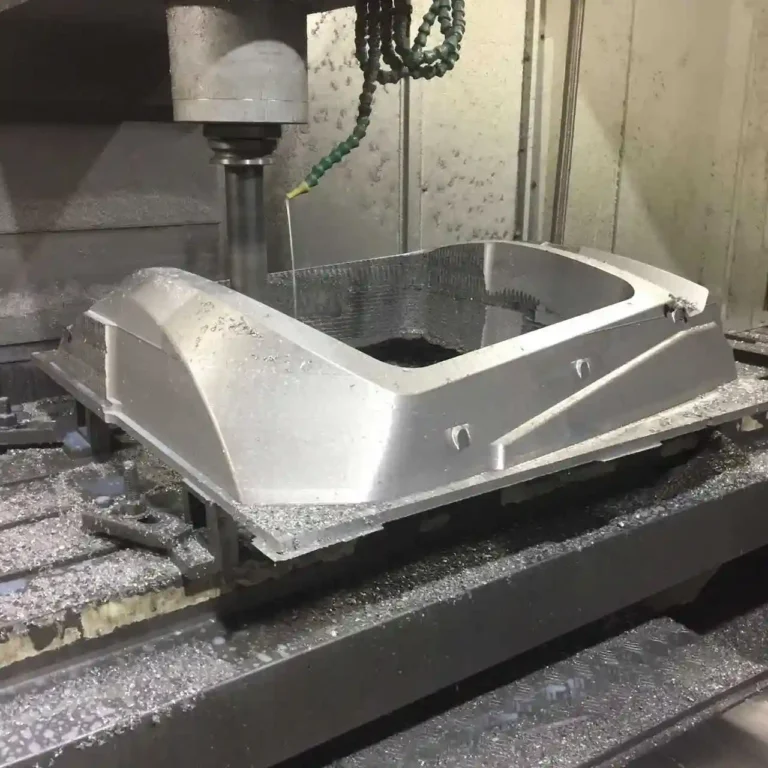
Thermoforming tooling can be made from aluminum, composites, or even 3D-printed molds — all of which are far quicker and cheaper to produce than hardened steel injection molds. That means you can iterate weeks faster for a new part: prototypes, tooling revisions, and pilot production are usually completed in days to weeks rather than months. For time-to-market, thermoforming often wins.
Typical thermoforming lead times (tooling + first run) can be as short as a few weeks for simple thin-gauge parts and a few weeks to a couple months for heavy-gauge parts with trimming and finishing. However, if your design needs complex matched dies, deep draws, or extensive secondary machining, those lead times increase. The practical takeaway: early communication about intended finishing (CNC trim, assembly, surface finish, printing) avoids surprises.
Tooling for thermoforming is typically much less expensive than injection molds (aluminum molds or machined composite molds vs. hardened steel). That low upfront cost makes thermoforming ideal for low to mid-volume production and product development. But remember: at very high volumes the per-part cost of injection molding usually falls below thermoforming due to lower cycle time and material usage — so pick the process by expected lifetime volume.
Thin-gauge thermoforming (roll- or sheet-fed) usually uses sheets under ~1.5 mm and is optimized for high-speed packaging and disposable items. Heavy-gauge (thick-gauge) starts around ~2 mm and goes to many millimetres or even an inch for structural parts. The machinery, heating profile, mold design, and trimming approach change between the two, so spec the gauge based on part function (cosmetic & barrier vs. structural & durable).
Thermoforming designers have powerful levers: draft angles, radii, uniform wall thickness via plug assists, ribs and beads for stiffness, and coining or secondary forming for snap features. Best practice: design with gentle radii, consistent wall thickness targets, and consideration for how the sheet will stretch. Also consider post-forming operations early (trim methods, sonic welding, inserts), because thinking about assembly at the start saves later cost and time. (Tip: very fine surface detail often needs pressure forming, not basic vacuum forming.)
Quality hinges on precise temperature control, mold design, and trimming/assembly. Modern thermoforming shops invest in CNC tooling, matched-die accuracy, automated trimming, and inline inspection to meet tight tolerances and repeatable cosmetic surfaces. For regulated industries (food, medical, aerospace) ask about certifications, traceability, and clean-room/sterile finishing capabilities. With the right process controls, thermoformed parts are robust, repeatable, and suitable for demanding applications.
Thermoforming is flexible, economical, and rapidly evolving. Whether you’re prototyping a new consumer product, specifying medical trays, or rethinking packaging for sustainability, thermoforming gives you multiple fast, lower-cost options — if you know how to design for them.
If you have sketches or an STL, share wall-thickness targets, estimated annual volumes, and functional requirements (food-grade, flame-retardant, structural). From that I can recommend: thin vs heavy gauge, material family, forming method, likely lead times, and quick design changes to reduce cost.
Q: Is thermoforming recyclable?
A: Many thermoforming materials (PET, HDPE, PP) are recyclable; design for mono-material parts and specify rPET or PCR where possible to maximize circularity.
Q: When should I choose thermoforming over injection molding?
A: If you want faster prototyping, lower tooling cost, or you’re producing low-to-mid volumes where tooling amortization favors thermoforming. If volumes are huge or parts need complex internal features, injection molding may win.
Q: How do I reduce wall-thickness variation?
A: Use plug assists, adjust sheet pre-stretch, design uniform radii, and leverage simulation to predict thinning before you cut tooling.

TKP Plastic is China's leading provider of vacuum forming solutions. We are defined by our commitment to innovation, uncompromising quality, and total customer satisfaction. Our expertise enables us to deliver projects that excel in cost-effectiveness, intricate design, and sustainable manufacturing. Partner with TKP to bring your vision to life with precision and reliability.